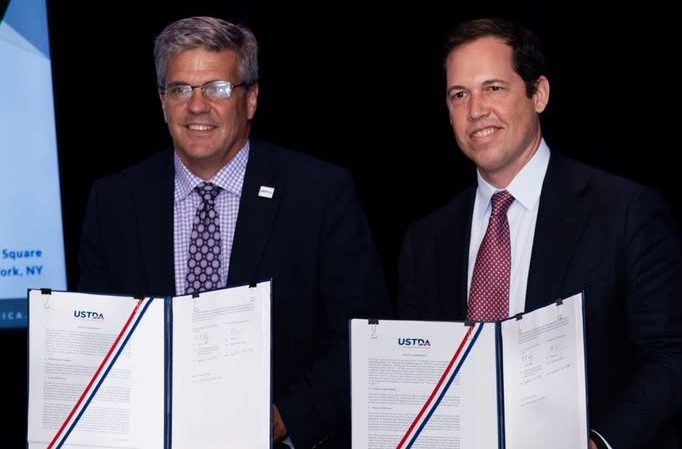
Gridworks has today signed agreements signifying its intention to become the lead equity investor and majority shareholder in the Kalumbila–Kolwezi Interconnector Project (“KKIP”), a 200km, high-voltage transmission line connecting Zambia’s grid to the Copperbelt mining region of the Democratic Republic of Congo (DRC).
KKIP will be the first privately developed and financed cross-border transmission project of its kind on the African continent. The line will carry up to 700MW of competitively priced power into Katanga, addressing a regional power deficit of more than 1GW.
Gridworks is investing alongside FIS-RDC, the DRC’s strategic investment fund, and EnPower, the project’s original developer since 2017, which retains a minority equity stake. Discussions are also under way with Zambian entities on further co-investment. Debt financing for the project is being arranged by Trafigura.
KKIP is expected to unlock new mining and industrial capacity in the Copperbelt, create export opportunities for Zambian power producers, and support broader regional power trading through the Southern African Power Pool. While anchored by mining offtake, the project will also have capacity to serve the wider population in both countries.
Tackling the energy gap
The DRC has a structural energy deficit of more than 1GW, met mostly by costly diesel generation. KKIP will help address this. The project is in the final stage of development — concessions, licences and authorisations are largely secured, with construction estimated to cost US$300 million.
What KKIP means for the DRC
KKIP is expected to:
- Supply electricity from across Southern Africa to power Congolese mining and industry, supporting social and economic development in local communities.
- Enable the development of mining and refining projects currently on hold due to a lack of available, cost-effective baseload power.
- Increase mining and refining output, generating greater fiscal contributions for the DRC.
- Deliver broader benefits for the DRC by expanding access to reliable, affordable power for communities and businesses, supporting local enterprise and jobs, and contributing to economic diversification.
What KKIP means for Zambia
KKIP will create export opportunities for Zambian power producers and transmission capacity for licensed operators and help spur the development of new generation. It will also strengthen cooperation between the DRC and Zambian governments and create a platform for long-term investment. Discussions are already under way with Zambian institutions on potential co-investment.
Chris Flavin, CEO of Gridworks, said:
“Gridworks is proud to be the lead equity investor in KKIP. This is an important regional integration project — Zambia and the DRC both stand to benefit from closer interconnection, and this project will give the Copperbelt access to reliable, competitively priced power and lay the foundation for further cross-border transmission investment across Southern Africa. While the project is anchored by mining offtake, there is capacity on the line to serve the wider population too. We look forward to working alongside our partners to deliver this important infrastructure.”